

Your roof doesn't knock on the door and ask for help. It communicates through subtler signals—stains, streaks, curled edges, and granules washing into the gutter—that are easy to overlook until the damage becomes expensive. For homeowners in Monroe, GA and across Walton County, recognizing those signals early is one of the most valuable skills you can have.
Georgia's climate is particularly hard on residential roofing. Between the relentless summer UV, humidity that hovers above 70% for months at a stretch, and afternoon thunderstorms that can drop hail with very little warning, Monroe roofs age faster and face more varied threats than roofs in most of the country. Combine that with the oak and pine canopies that shade nearly every street in the area—and drop debris year-round—and you have conditions where small problems compound quickly.
The good news: most roofing failures don't happen suddenly. Your roof usually tells you something is wrong well before a major leak or structural issue develops. Here are the 10 warning signs that deserve your attention, what each one actually means, and what to do about it.
Why Georgia Roofs Age Faster Than You'd Expect
Before we get into the signs themselves, it's worth understanding why Georgia homeowners can't afford to adopt a "set it and forget it" approach to roof care.
- Heat and UV: Monroe and other cities throughout Georgia regularly see summer temperatures above 90°F, and asphalt shingles absorb and radiate heat from the sun throughout the day. That sustained heat exposure accelerates granule loss, increases thermal cycling stress, and degrades sealant strips faster than in cooler climates.
- Humidity: Persistent high humidity encourages algae and moss growth, accelerates wood rot in compromised fascia and decking, and can cause moisture-related warping even in areas that appear dry from the outside.
- Storm frequency: Georgia averages more thunderstorm days per year than almost any other state. Hail, high winds, and falling debris from mature trees are recurring threats throughout spring and summer.
The National Roofing Contractors Association (NRCA) recommends annual professional roof inspections for all homeowners—a standard that's especially sensible in Georgia's climate. For a deeper look at what's at stake financially, see our post on how roof inspections save you money.
10 Warning Signs Your Roof Is Trying to Tell You Something
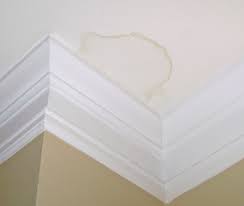 1. Water Stains or Discoloration on Your Ceiling
This is the most visible sign that something has gone wrong, but it's rarely the full picture. When a yellow-brown ring or spreading stain appears on an interior ceiling, it confirms that water has entered the structure—but the actual entry point on the roof is often not directly above the stain. Water travels along roof panels, rafters, and attic lumber before it drips down and leaves a mark, sometimes traveling several feet from where it came in.
It's also worth knowing that ceiling stains don't always mean the roof itself is leaking. Condensation in the attic, a plumbing leak above, or a failing window seal can produce the same appearance. The key diagnostic question is whether the stain appears, darkens, or grows after rainfall. If the answer is yes, the roof is the likely culprit and a professional roof inspection is the right next step.
Don't wait for the stain to spread. Water that reaches visible ceiling material has almost certainly already saturated insulation and been in contact with wood framing—conditions that invite mold. The EPA notes that mold can begin developing within 24 to 48 hours of moisture exposure.
Note: In Monroe's humid summers, attic condensation can occasionally mimic roof leak staining. An inspection that includes the attic—not just the roof surface—will distinguish between the two.
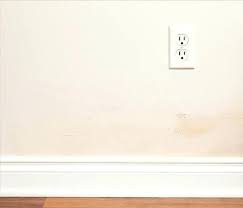 2. Water Marks or Staining on Exterior Walls
Staining on the exterior walls of your home, particularly near the roofline, points to a different failure point than ceiling stains: the step flashing. Step flashing is the metal material installed in overlapping segments where a roof plane meets a vertical wall, such as along a dormer, chimney, or addition. When it works loose, corrodes, or rusts through, water runs directly down the wall behind the siding rather than away from the structure.
If the marks appear or worsen after rain, flashing is almost always the cause. In some cases, gaps where two types of siding material meet, or a failing window seal nearby, can also be responsible—but a professional can differentiate. Either way, the fix requires integrating new flashing with both the roofing and siding materials, which is more involved than it looks and best handled by an experienced contractor.
Unaddressed, water running behind siding reaches the fascia boards and sheathing, where rot can take hold without any obvious exterior sign for months.
 3. Granules Collecting in Gutters and Washing Out Downspouts
Asphalt shingles are coated in mineral granules that do two critical jobs: they protect the asphalt layer from UV degradation, and they give the shingle its fire resistance and impact protection. Some granule shedding is normal over the life of a shingle, particularly when a new roof is first installed as loose factory granules wash off. The concern is a sudden or significant increase in granules appearing in gutters, downspout splash zones, or on the ground around your home.
When granule loss becomes substantial, the asphalt beneath is exposed directly to Georgia's sun. Without that protective layer, shingles become brittle, crack, and ultimately fail much faster. In extreme cases you'll see smooth or bare patches on the shingle surface from the ground. At that point, shingle replacement isn't a question of if—it's a question of when.
The NRCA's guidance is clear: heavy granule loss typically means shingles are approaching or past the end of their useful service life. Check whether your shingles are still under the manufacturer's warranty before committing to a replacement budget—GAF, one of the industry's leading shingle manufacturers, offers warranties that may still apply depending on the product and installation year.
If granule loss is catching up to your roof, our post on how long roofs last in Georgia can help you think through whether repair or full replacement is the right call.
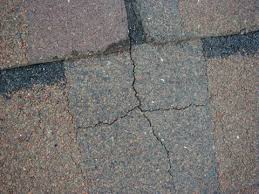
4. Cracking Shingles
Cracking shingles are the downstream consequence of significant granule loss. Once the protective mineral layer wears away, the asphalt layer is directly exposed to UV radiation and thermal cycling—the daily expansion and contraction caused by Georgia's dramatic temperature swings between summer days and nights. Over time, this causes the asphalt to dry out and crack.
Cracked shingles are a structural problem, not just cosmetic. Each crack is a potential water entry point, and in Monroe's rain-heavy climate, any opening in the shingle surface will eventually let water in. If you can see cracking from the ground, the shingles are likely already overdue for attention. If cracking appears on a roof that's still within its expected lifespan, it may signal an installation problem or a ventilation issue driving excessive heat buildup—worth having diagnosed before simply replacing the shingles.
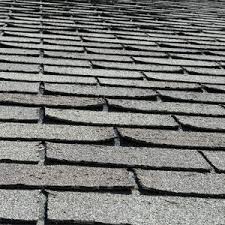 5. Cupping or Wavy Shingles
Healthy shingles lie flat against the roof deck. When the edges begin to curl upward or the shingle surface takes on a wavy, undulating appearance, that's called cupping—and it's a sign the shingles are near the end of their life.
Age and natural weathering are the primary causes. An attic that lacks proper ventilation can accelerate cupping by allowing heat to build up beneath the shingles, speeding up the degradation of the material from the underside. In Monroe's summers, attic temperatures can reach 140°F or higher in poorly ventilated spaces—conditions that age shingles years ahead of schedule.
Cupped shingles are particularly dangerous during storm season. The raised edges act like airfoils during high winds, making it far easier for gusts to get underneath and peel shingles off entirely. Given that Monroe typically sees its most severe thunderstorms between April and September, cupped shingles going into that window are a serious liability. This is one of the most vulnerable conditions your roof can be in heading into storm season.
6. Missing Shingles
A missing shingle is your roof's most direct cry for help. The overlapping pattern of shingle installation is what keeps water out—remove one shingle from that pattern and you've created a direct path for rain to reach the underlayment and decking beneath.
Missing shingles in Monroe most often result from two causes. The first is storm damage: strong thunderstorm winds, even below the threshold of a named event, can lift shingles that have aged past their wind resistance rating or whose sealant strips have failed. The second is wildlife—squirrels, raccoons, and other animals common in Walton County will use overhanging tree branches to access roofs and can dislodge or damage shingles in the process. If tree branches are anywhere near or touching your roof, trimming them back is one of the most cost-effective things you can do for your roof's longevity. See our post on 6 ways trees can damage your roof for a full rundown.
A missing shingle should be treated as an urgent repair, not something to get to eventually. Each rainstorm that hits an exposed section adds risk of water infiltration.
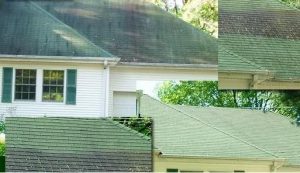 7. Black Streaks or Green Moss on the Roof Surface
Dark streaks running down the surface of your roof are a signature of Gloeocapsa magma, a blue-green algae that feeds on the limestone filler in asphalt shingles. In Monroe's warm, humid climate, algae growth is extremely common—more so than in drier parts of the country—and once established, it spreads readily from roof to roof, carried by wind and rain.
Green or black moss patches are a related but more aggressive problem. Unlike algae, which primarily discolors the surface, moss physically lifts the edges of shingles as it grows beneath them, creating gaps that allow water infiltration and accelerating the breakdown of the shingle material itself.
Neither should be left to grow unchecked. Zinc strips installed near the ridge of the roof release a fungicide when it rains, which flows down the surface and inhibits regrowth. However, if algae or moss has been recurring over multiple seasons, a professional assessment will determine whether the current shingles can be effectively treated or whether algae-resistant shingles—available from several manufacturers including GAF in their Timberline CS line—should be part of a future replacement conversation. Avoid pressure washing as a DIY solution; the force required to remove algae typically removes granules along with it.
8. Leaks That Appear During Temperature Swings
If your roof leaks specifically during cold snaps rather than rain events, or in the days following a freeze, the likely cause is an ice dam. Ice dams form when heat escaping through an inadequately insulated attic melts snow on the upper portion of the roof; that meltwater runs down toward the cold eaves and refreezes. The resulting ice ridge traps subsequent meltwater, which then backs up under shingles and leaks into the home.
Monroe doesn't see the sustained snow accumulation of northern states, but the area does experience occasional winter freezing events, and even an inch or two of snow combined with temperature swings is enough for ice dams to form. Newer roofs installed with an ice-and-water barrier along the eaves are largely protected, but older roofs without that layer can be vulnerable even in Georgia's mild winters.
The long-term fix is improving attic insulation and ventilation so that less heat escapes to the roof surface—which also makes your home more energy-efficient year-round. If you're experiencing unexplained winter leaks, a qualified inspector can determine whether ice dams, condensation, or another issue is responsible.
9. Daylight Visible Through the Attic Roof Boards
This one requires a trip to the attic during daylight hours. If you can see shafts of light coming through the roof boards, you have gaps in your roofing system that are large enough to let in not just light but also water, pests, and cold air. Even pinhole-sized gaps matter in Monroe's heavy rain events, where sustained rainfall and wind can drive water through the smallest openings.
While you're up there, also look for soft spots or sponginess when pressing on the decking from below—a sign that moisture has already compromised the wood. Any daylight visible through a roof is a condition that warrants prompt professional attention. The longer it goes unaddressed, the more likely it is that structural decking repairs will be needed alongside the roofing fix.
10. Unexpectedly High Energy Bills
This warning sign doesn't come from looking at your roof at all—it shows up on your utility statement. If your heating or cooling costs spike without a corresponding change in your usage habits or utility rates, compromised roof insulation or ventilation is worth investigating.
A roof that's allowing conditioned air to escape, or outside air to infiltrate, forces your HVAC system to work harder to maintain temperature. Similarly, moisture intrusion that has saturated attic insulation dramatically reduces its R-value, meaning it's no longer doing the thermal work it was designed to do. In Monroe's climate—where air conditioning runs for a significant portion of the year—the cost difference between a well-sealed and a compromised roof envelope is real and ongoing.
If your energy bills have crept upward without explanation, combining an HVAC check with a roof and attic inspection is a good diagnostic approach.
Repair or Replace? A Quick Decision Framework for Monroe Homeowners
Not every warning sign means you need a full new roof. Here's a practical way to think about it:
- Lean toward repair when the affected area is limited to one or two sections, the roof is less than 15 years old, the underlying decking is structurally sound, and only a handful of specific issues (a few missing shingles, a flashing section, an algae patch) have been identified.
- Lean toward replacement when the roof is 20 years or older, when multiple warning signs appear simultaneously across different areas of the roof, when granule loss or cracking is widespread rather than isolated, or when an inspection reveals that the decking itself has been compromised by moisture. Repeated repairs on an aging roof often cost more over a 3–5 year window than a timely replacement would have.
Our residential roofing team can walk you through the inspection findings and give you an honest assessment of which direction makes financial sense.
What to Do When You Spot a Problem With Your Roof
- Step 1: Don't wait for it to get worse. Every one of the signs above represents a problem that is easier and cheaper to address now than it will be after the next storm season. Small, targeted repairs caught early rarely become full replacements. The reverse is rarely true.
- Step 2: Schedule a professional inspection. Most of these signs are visible from the ground or from inside the attic, but a proper assessment requires getting on the roof and evaluating flashing, decking, ventilation, and shingle condition systematically. Horizon Roofing offers free roof inspections—no obligation, no pressure. For more on what that process involves and why timing matters, see our post on how often your roof should be inspected.
- Step 3: Document everything before any work begins. If storm damage is involved, photographs and a written inspection report are essential for insurance claims. Our team knows what insurers require and can help you document properly from the start. For a step-by-step walkthrough, see our post on dealing with roof damage after a storm.
- Step 4: Act on the inspection findings promptly. If emergency roof repair is needed—active leak, significant structural exposure, missing shingles ahead of a forecasted storm—don't defer it. Horizon Roofing provides emergency services for situations that can't wait.
For ongoing prevention rather than reactive repair, our roof maintenance program is designed to catch these warning signs before they progress. Our post on four simple ways to preserve your roof is also a practical starting point.
Frequently Asked Questions
Can I spot these warning signs from the ground, or do I need to get on the roof?
Several of them—cupping, black streaks, missing shingles, and obvious granule loss—are visible from the ground with good eyesight or basic binoculars. Ceiling stains and attic daylight require going inside. However, a reliable assessment of flashing condition, valley integrity, and decking health requires a qualified professional on the roof surface. Ground-level observation is useful for knowing when to call, not for confirming the diagnosis.
How urgent are most of these signs?
It depends on the sign and the season. Missing shingles ahead of storm season, active ceiling leaks, or visible daylight through attic boards are urgent—days, not weeks. Granule loss, cupping, or algae growth without active leaking are serious but can typically be addressed within a scheduled appointment. When in doubt, call sooner. An inspection costs nothing with Horizon Roofing, and the information it provides is always worth having.
My roof is less than 10 years old. Should I still watch out for these signs?
Most of these signs reflect normal aging over 15–25 years, but a newer roof showing them is a red flag worth investigating. Premature failure can result from poor installation, a manufacturing defect in the shingles, inadequate ventilation, or unusual weather events. If your roof is young and showing distress, a professional inspection and documentation for a potential warranty claim are both worthwhile.
Is algae on my roof just cosmetic, or does it cause real damage?
Both, in Monroe's climate. Algae itself primarily discolors the surface and can marginally accelerate granule loss over time. The bigger concern is that algae creates conditions favorable for moss, which does cause structural harm by lifting shingle edges and retaining moisture against the roof surface. In Georgia's humidity, an untreated algae problem rarely stays just aesthetic for long.
How much do these repairs typically cost in the Monroe area?
Costs vary widely by issue: a simple shingle replacement or flashing repair may run $150–$500. Larger flashing replacements, valley work, or decking repairs involving several square feet can run into the thousands. A full roof replacement on a typical Walton County home generally ranges from $8,000 to $18,000 or more depending on size, pitch, and material. These are general ranges—your specific situation warrants a direct estimate. Contact us for a free assessment.
Monroe's Roof Inspection Experts — Free, Honest Assessments
Horizon Roofing has been helping Monroe, GA and Walton County homeowners protect their biggest investment for years. We're a GAF-certified contractor with an A+ BBB rating, and we give every homeowner a straight answer—not a sales pitch.
If your roof is showing any of the signs above, or if you simply haven't had an inspection in the last year, now is the right time.
Call us at (770) 746-7611 or schedule your free roof inspection online. We'll tell you exactly what your roof is trying to say.